
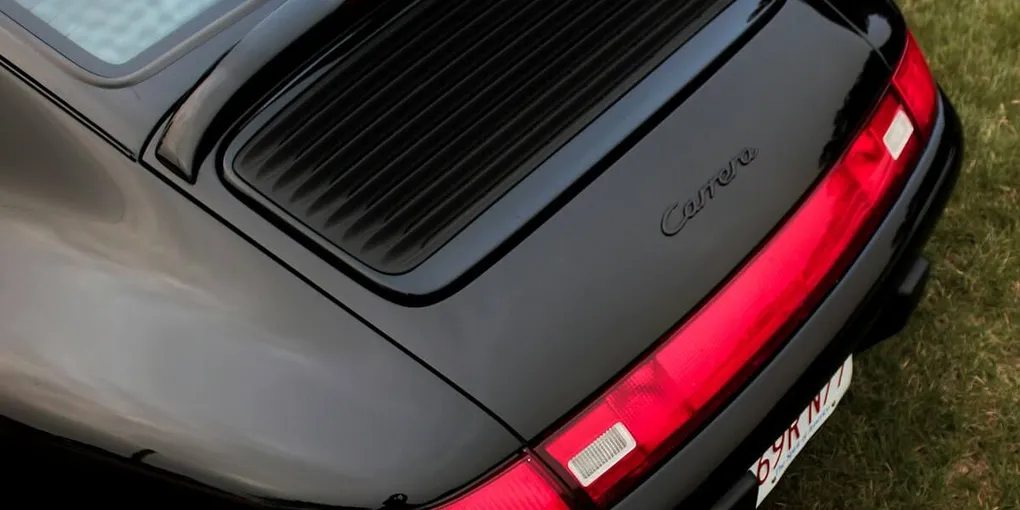

On paper, the Porsche 911’s layout is objectively wrong. Hanging the engine behind the rear axle creates a pendulum effect — weight that wants to swing wide in corners and snap back when you lift off the throttle. The Chevrolet Corvair tried rear-engine and became synonymous with dangerous handling. The DeLorean tried it and became a movie prop. Even Volkswagen, the company that gave Porsche its rear-engine heritage, moved to front-engine, front-wheel-drive cars decades ago.
And yet, the 911 is one of the most successful sports cars in history — on the road, on the track, and in motorsport. How?
The Beetle Connection
The answer starts with a man named Ferdinand Porsche — the grandfather, not the son. He designed the Volkswagen Beetle in the 1930s with a rear-mounted, air-cooled flat-four. The logic was practical: put the engine over the drive wheels for traction, eliminate the driveshaft for simplicity, and use air cooling to avoid freezing in winter.
When Ferdinand’s son, Ferry Porsche, decided to build a sports car in 1948, he started with the same formula. The Porsche 356 used a modified Beetle platform — rear-engined, air-cooled, lightweight. It worked. The 356 was successful in racing and popular with buyers. When it came time to replace it in 1963, Porsche didn’t question the layout. They refined it.
The 911 was born with the engine in the same place — behind the rear axle — but with a completely new flat-six engine and a body designed by Ferry’s son, Butzi Porsche.
The Physics Problem
A rear-engined car concentrates 60–65% of its weight over the back wheels. In a corner, this creates:
- Massive rear grip under acceleration — the weight is already where you want it.
- Excellent braking — all four tires share the load because the weight distribution doesn’t nose-dive as much.
- … and a terrifying tendency for the rear to overtake the front when you lift off the throttle mid-corner.
This is lift-off oversteer, and in early 911s, it was lethal. The car would corner fine under power, but if a driver panicked and lifted, the weight transfer forward would unload the rear tires, and the heavy tail would swing around. Early 911s earned a reputation as widow-makers — especially the turbocharged 930, nicknamed “the Doctor Killer.”
How Porsche Fixed It (Without Moving the Engine)
Instead of abandoning the layout, Porsche spent 60 years engineering around it:
Longer wheelbase: Every generation stretched the wheelbase, moving the engine slightly closer to the center of the car.
Wider rear track and tires: The rear tires on a modern 911 are significantly wider than the fronts — 305mm vs. 245mm on a 911 Turbo. More rubber where the weight lives.
Multi-link rear suspension: The 993 generation (1994–1998) introduced an all-alloy multi-link rear suspension that tamed the worst of the snap-oversteer tendencies. This was the turning point — the 993 is still considered one of the greatest driver’s cars ever built.
Active systems: The 996 and later generations added PSM (Porsche Stability Management), torque vectoring, active engine mounts, and rear-axle steering. Modern 911s use computers to make the rear-engine layout feel telepathic rather than terrifying.
Weight distribution evolution: The 992-generation 911 has roughly 39/61 front-to-rear weight distribution — still heavily rear-biased, but significantly better than the 35/65 of early cars.
Why Porsche Keeps It
At this point, Porsche has the engineering capability to build a mid-engined successor. They already do — it’s called the 718 Cayman, and by most objective metrics, it’s the better-handling chassis. So why does the 911 keep its engine in the “wrong” place?
Because the rear-engine layout isn’t just a compromise. It’s an advantage when exploited correctly.
- Unmatched traction out of corners: That rear weight bias lets a 911 Turbo launch to 60 mph in 2.6 seconds on street tires. Mid-engined cars can’t match that without all-wheel drive.
- Unique steering feel: With so little weight over the front axle, the steering is light, precise, and loaded with feedback. No front-heavy engine dulling the connection.
- Packaging that works: The rear seats (however token) and the flat-six’s low profile allow a 2+2 layout in a package smaller than most mid-engined competitors.
- Heritage and identity: At this point, the rear engine is the 911’s soul. It’s not a flaw to be fixed — it’s the defining characteristic that makes a 911 drive like nothing else.
Related: The 911’s rear weight bias puts unique demands on its differential — Porsche’s PTV system is one of the most sophisticated torque-vectoring setups on the market. For another iconic sports car story, see the history of Ferrari.
The Bottom Line
The Porsche 911 is proof that engineering talent can overcome physics — and that sometimes, a “flaw” turns into a feature if you’re stubborn enough to refine it for six decades. It’s not the easiest layout, or the safest, or the most logical. But it’s the one that’s won Le Mans, Dakar, and the hearts of enthusiasts worldwide.
Don’t fix what isn’t broken. Especially when it’s this much fun.