

A hybrid is a car with two power sources: a petrol engine and an electric motor, working together or taking turns.
That’s the simple version. The clever part is why it saves fuel, and it’s not what most people think. A hybrid’s biggest trick isn’t the electric motor. It’s recovering energy you’d otherwise throw away as heat.
Here’s how the whole system works, from the battery to the brakes.
The Three Flavors of Hybrid
First, the labels, because the industry has made a mess of them.
Full hybrid (HEV). A petrol engine plus an electric motor and a small battery. The car can creep and crawl on electric power alone for short distances, but you never plug it in. The battery recharges itself from the engine and from braking. The original Prius is the textbook example.
Mild hybrid (MHEV). A small electric motor (usually 48-volt) that assists the engine but can’t drive the car on its own. It smooths stop-start, gives a small boost under acceleration, and recovers a little energy when you coast. Cheapest to add, smallest gain.
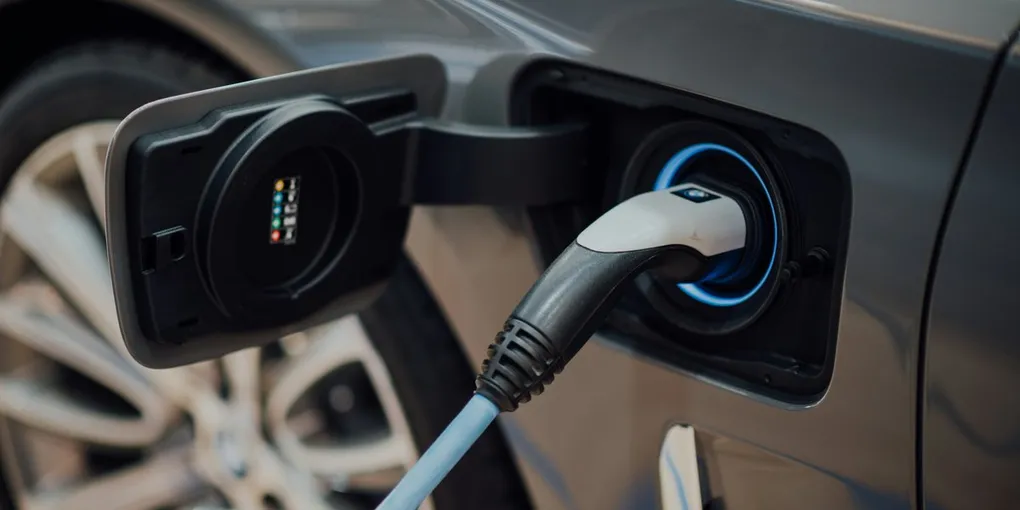
Plug-in hybrid (PHEV). A much bigger battery you can charge from the wall, paired with an electric motor strong enough to drive the car on electric power alone for a meaningful distance: typically 20-50 miles. Short commute? You run on pure electric. Long trip? The engine takes over. The tradeoff is weight and cost: you’re carrying two complete powertrains.
Regenerative Braking: The Real Fuel Saver
Every time you brake in a normal car, the brakes turn forward motion into heat and throw it away. A hybrid recovers it.
Lift off the throttle and the electric motor flips into a generator. The car’s momentum spins the motor, which creates electricity, which charges the battery. That resistance is what slows you down, which is why hybrids often feel like they’re engine-braking on their own.
Regenerative braking is where most of a hybrid’s city fuel savings comes from. In stop-and-go traffic, you’re constantly recovering energy that a normal car burns off as brake dust and heat. It’s why hybrids are dramatically more efficient in the city than on the highway.
The Engine: Built Different
The petrol engine in a hybrid isn’t a normal engine bolted to a motor. It’s usually running the Atkinson cycle.
An Atkinson engine holds the intake valve open slightly longer at the start of compression, which reduces the fuel burned per stroke but trades away some low-end torque. In a normal car that torque loss would be a problem. In a hybrid, the electric motor fills in the gap with instant torque from zero RPM.
It’s a perfect marriage: the engine runs at its most efficient point, and the electric motor covers the parts of the rev range where the engine is weakest.
How the Pieces Talk: Series vs Parallel
There are two ways to wire the powertrain together.
Series hybrid. The engine isn’t connected to the wheels at all. It spins a generator, the generator makes electricity, and the electric motor drives the wheels. Simple and efficient at low speed, but you lose some energy in the conversion. The engine basically becomes a range extender.
Parallel hybrid. The engine and the motor can both drive the wheels, together or separately. More complex, more efficient at speed.
Toyota’s famous “power-split” system (the one in the Prius) is actually both at once, using a planetary gear set to blend engine and motor power continuously. It’s the most influential hybrid design ever built, and nearly every full hybrid on the road descends from it.
The Battery
Modern hybrids use lithium-ion packs: the same chemistry as your phone, but built to survive heat, cold, and a decade of charge cycles. Older Toyotas used nickel-metal hydride, which is heavier and less energy-dense but nearly indestructible.
Hybrid batteries are small and shallow-cycled: they charge and discharge a little, constantly, rather than deep-cycling like a full EV. That’s the secret to their longevity. A hybrid battery routinely outlasts the warranty, and often the car’s first owner.
A PHEV’s battery is bigger and gets deep-cycled more like an EV’s, which is the tradeoff for that 20-50 miles of electric range.
Which One’s for You
You want the cheapest, easiest fuel savings: a full hybrid. No plug, no lifestyle change, and the biggest city gains.
You have a short commute and a place to plug in: a PHEV. Run your daily loop on electric and keep the petrol engine for road trips.
You want the tech but not the cost or complexity: a mild hybrid. Modest real-world gain, but it’s cheap and it makes stop-start bearable.
The hybrid was once a compromise for people who wanted an EV but couldn’t commit. Now it’s just the smart middle: the drivetrain that turns your braking into your next mile.
Related: For the honest case on where electric still falls short, read EV vs ICE. And how a differential works explains the planetary gears behind Toyota’s power-split.