
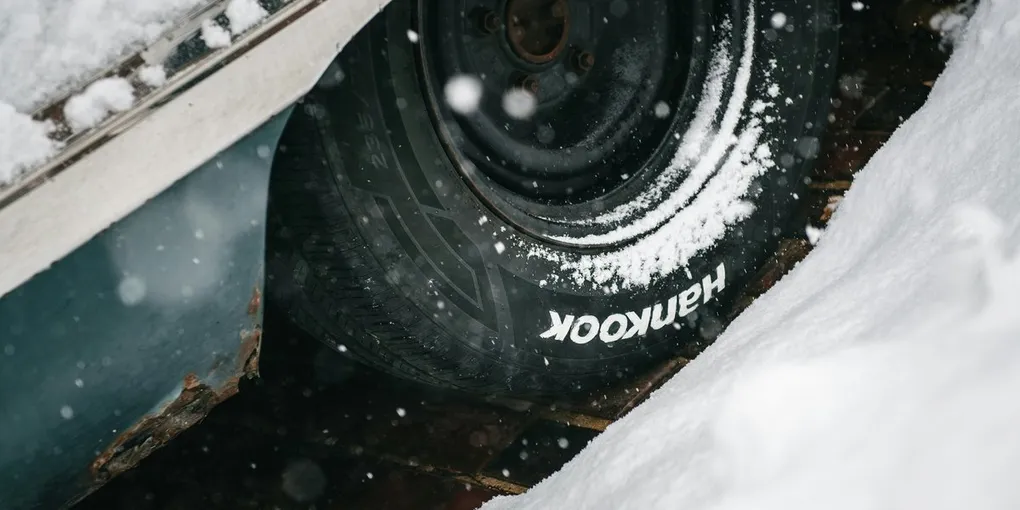

Tires are the only part of the car that touches the road. A patch of rubber the size of your palm is what’s keeping four digits of horsepower pointed in a useful direction.
And here’s the thing most drivers miss: tires aren’t one-size-fits-all. They’re built for a temperature. The “seasonal” in “all-season” is doing more work than you think.
There are three real categories on the shelf, and they behave completely differently depending on what the thermometer says.
The 7-Degree Rule
Rubber is temperature-sensitive. Below roughly 7°C (about 45°F), the compound in a summer tire hardens. It turns from grippy to glassy.
This isn’t a performance thing: it’s a safety thing. A summer tire in freezing weather gives up grip even on dry pavement, because the rubber has lost its flexibility. The tread can’t conform to the road surface.
Winter tires exist for cold, not just for snow. They use a compound that stays soft below 7°C. The snow and ice performance is a bonus. The real job is keeping the rubber pliable when it’s freezing out.
Summer Tires: Grip When It’s Warm
Summer tires use a soft, sticky compound designed for warm, dry and wet conditions. They have less siping and fewer grooves than winter tires, which puts more rubber on the road.
They’re the fastest street tire you can buy: the best dry and wet grip of anything meant for daily road use, as long as the temperature is up.
There’s a step above, though. Street-legal track tires, like semi-slicks and R-compounds, grip harder in the dry than any summer tire. But they sacrifice wet performance, cold grip, and tread life to do it. They’re legal for the road, but not really built for it. For a car you actually drive on the street, a good summer tire is the realistic ceiling.
The catch: below 7°C they’re the worst tire you can be on. Not just worse: genuinely dangerous. The compound stiffens, braking distances grow, and you’re one cold morning away from a slide.
Summer tires are for warm climates and performance driving. If it never freezes where you live, they’re the right call year-round. If it does, they’re a fair-weather tire.
Winter Tires: Grip When It’s Cold
Winter tires flip the priorities. The compound stays soft in the cold, and the tread is cut deep with sipes: thousands of tiny slits that open up to bite snow and ice.
The result: dramatically shorter stopping distances in snow, on ice, and on cold dry pavement. Tests consistently show winter tires stopping far shorter than all-seasons in snow: the gap is measured in car lengths, not feet.
The tradeoffs: in warm weather, that soft compound gets too soft. Winter tires feel squishy, wear quickly, and give up dry grip above about 15°C. They’re also noisier.
If your winter regularly drops below 7°C, you need winter tires, even if it doesn’t snow much. Cold dry pavement is enough of a reason.
All-Season Tires: The Compromise
All-season tires split the difference. A compound that works acceptably from near-freezing to hot, with moderate siping for light snow.
They’re the default because they’re good enough most of the time, in most places. You never have to swap them. You never have to store a second set.
The catch is in the name: all-season means no-season. An all-season tire is mediocre at everything. It won’t match a summer tire’s warm grip, and it won’t match a winter tire’s cold grip. It’s rubber that’s always roughly okay.
All-seasons are fine if your winter is mild: occasional light snow, temperatures that hover near freezing but rarely plunge. For real winters, they’re a false economy.
All-Weather Tires: The New Category
Worth knowing about: all-weather tires. These are all-seasons that also pass the severe snow standard: the three-peak mountain snowflake (3PMSF) symbol.
Think of them as an all-season that’s been pushed hard toward winter. You can run them year-round and still stay legal and safe in most snow. They’re not as good in deep winter as a dedicated winter tire, but they’re a big step up from a standard all-season.
The Comparison
| Summer | All-Season | All-Weather | Winter | |
|---|---|---|---|---|
| Above 15°C | Best grip | Good | Good | Soft, vague |
| 0-7°C | Hardening | Acceptable | Good | Good |
| Below 0°C / snow | Dangerous | Weak | Decent | Best |
| Siping | Low | Moderate | High | Highest |
| Wear in wrong season | Fast | Normal | Normal | Fast when hot |
What You Should Run
Two sets are better than one. A summer set and a winter set each last roughly twice as long as if you ran one set year-round, so the extra upfront cost mostly evens out over time, and you get the right compound in every season.
If you can only afford one set, match it to the worst conditions you’ll actually face. Mild climate, no real winter: all-season or all-weather. Real winters with real cold: you want winter tires on for the season, full stop.
The tires are the cheapest performance and safety upgrade on the car. Don’t compromise the one part that actually touches the road.
Related: Learn what all those numbers mean with how to read your tire sidewall. And the tire pressure guide covers the other half of keeping that contact patch happy.