
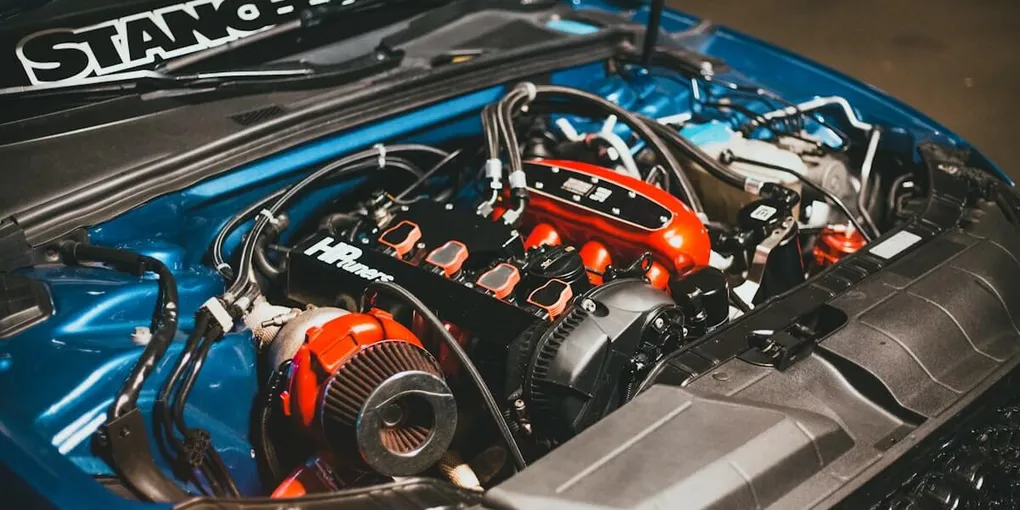

Forced induction. It’s the cheat code of internal combustion — take an engine, cram more air into it, add more fuel, and suddenly your sensible commuter car has the lungs of something much angrier. But there are two paths to boost, and they couldn’t be more different in how they deliver the goods.
The Basic Idea
Both turbos and superchargers are air compressors. An engine makes power by burning air and fuel. More air + more fuel = bigger bang = more power. The trick is how you spin the compressor.
Turbochargers: Free Lunch (With a Side of Lag)
A turbocharger uses exhaust gas to spin a turbine, which spins a compressor wheel on the other end of a shaft. It’s elegant — you’re harvesting waste energy from the exhaust that would otherwise just make noise.
What’s great about turbos:
- Efficiency: They don’t sap crankshaft power. The energy is “free” — already-burned exhaust gas.
- Top-end punch: Turbos love high RPM and heavy load. On the highway, they pull like freight trains.
- Modern tunability: With electronic wastegates and variable geometry, modern turbos are sharper than ever.
- Packaging: Turbos are compact and can be mounted just about anywhere in the exhaust stream.
The downsides:
- Lag. The exhaust needs to build up enough flow to spin the turbo. Below 2,000–2,500 RPM, nothing happens. Then everything happens at once.
- Heat management. Turbos run incredibly hot. Your oil and coolant systems need to be up to the job.
- Complexity. Intercoolers, boost controllers, blow-off valves — the supporting cast is substantial.
Superchargers: Instant Gratification
A supercharger is belt-driven directly off the crankshaft. Step on the gas, and boost arrives right now — because the compressor is mechanically linked to engine RPM.
What’s great about superchargers:
- Instant throttle response: No waiting for spool. The boost curve mirrors your right foot.
- Linear power delivery: Power builds progressively. It feels like a bigger naturally aspirated engine.
- Simplicity (relatively): Roots and twin-screw blowers are mechanically straightforward — no exhaust plumbing required.
- That whine: A positive-displacement supercharger at full chat sounds like the apocalypse is approaching. It’s intoxicating.
The downsides:
- Parasitic loss: Driving the compressor eats 50–100+ horsepower from the crank. You’re spending power to make power.
- Heat soak: Especially Roots-style blowers can heat-soak in sustained use, losing efficiency.
- Packaging constraints: A blower sits on top of the engine, which means hood clearance and intake routing headaches.
Which One Should You Choose?
Go turbo if: You care about efficiency, peak power, and you don’t mind a split-second of anticipation before the drama. Modern daily drivers almost universally choose turbos for good reason — they sip fuel when you’re cruising and shred tires when you’re not.
Go supercharged if: You want that big-engine feel with zero lag, you value throttle modulation on track or twisty roads, and you’re okay with the fuel economy penalty. Hellcats, ZR1s, and old-school AMGs all went this route for a reason.
One final thought: the turbo-vs-supercharger debate has shifted significantly in the last decade because of how modern OEMs use turbos. Nearly every new car with forced induction is turbocharged, not because turbos are universally superior, but because they are more efficient at part-throttle cruising — which is what emissions tests measure. A supercharger is always consuming power from the crank, even when you’re just maintaining 70 mph on the highway. A turbo, when you’re off boost, is essentially a restriction in the exhaust stream but not a meaningful parasitic drain. This is why superchargers have largely disappeared from mainstream production cars and now exist almost exclusively in high-performance applications where fuel economy is not the priority. The decision is not just about character — it is about where, and how, you spend most of your time driving.
Can’t decide? Volkswagen’s twin-charged 1.4 TSI and Volvo’s compound-charged engines prove you can have both — a supercharger for low-end grunt, handing off to a turbo for top-end fury. It’s complicated, it’s expensive, and it’s absolutely brilliant.
The choice between turbocharging and supercharging is not about which one is better. It is about which character you want your engine to have. A turbo rewards patience with a surge of power that builds and builds. A supercharger rewards decisiveness with instant, linear response. Both are valid. Both are brilliant when done right. The only wrong answer is the one that does not match how you actually drive. Choose the boost that suits your style, build the supporting systems properly, and your engine will reward you with years of forced-induction joy. And if you still cannot decide — well, compound charging exists for a reason.
Related: For a completely different approach to making power, read about the rotary engine — no pistons, no valves, just spinning triangles. And if you’re wondering which fuel to feed your boosted engine, here’s premium vs regular.
Boost is boost — the delivery is everything.
Twin-Scroll, VGT, and the Modern Turbo Revolution
If your last experience with a turbo was a 1990s car that did nothing until 4,000 RPM and then tried to kill you, the technology has moved on. Twin-scroll turbos separate the exhaust pulses from alternating cylinders into two channels that hit the turbine at different points, dramatically reducing lag and improving response. Variable geometry turbos (VGT) use movable vanes in the turbine housing to optimize flow at both low and high RPM — acting like a small turbo for quick spool and a large turbo for top-end flow. These technologies are why a modern turbo engine like BMW’s B58 feels almost naturally aspirated in its response, with peak torque available from under 2,000 RPM. The turbo lag of old was a design limitation. The turbo response of today is an engineering solution.