
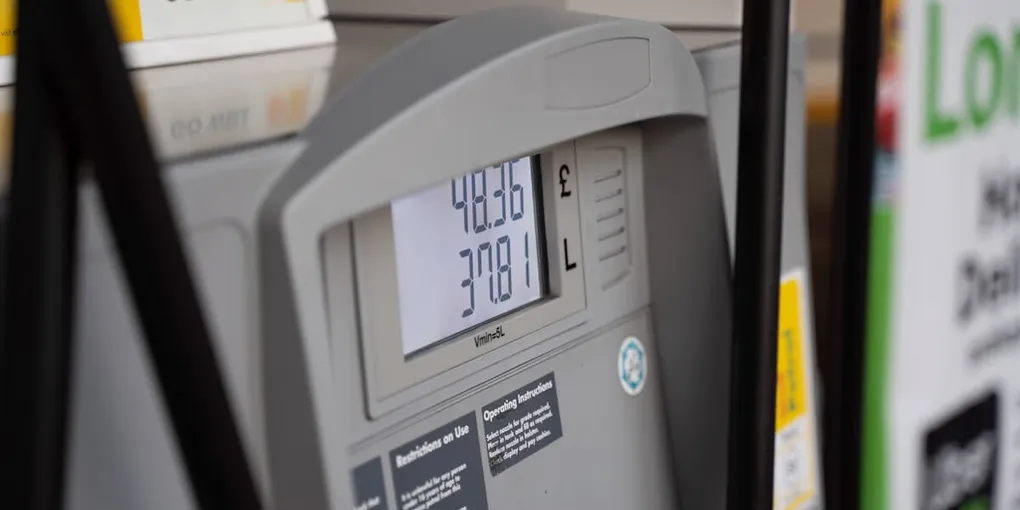

Walk up to any gas pump and you’re faced with a choice: 87, 89, 91, 93. It’s easy to assume that higher numbers mean higher quality — after all, in most consumer products, “premium” means better. But octane is not a quality rating. It is a measurement of a specific physical property, and treating it as anything else leads to the single most common mistake car owners make at the pump: spending more money for no benefit. The petroleum industry does not go out of its way to correct this misunderstanding, because premium fuel has higher profit margins. The pump layout — with 93 on the right, often labeled “Ultra” or “Supreme” — is designed to make you feel like you are buying the good stuff. You might be. Or you might be paying extra to make your engine run exactly the same as it would on 87. The only way to know is to read the owner’s manual. Premium costs 60–80 cents more per gallon, and for most drivers, that’s an extra $200–400 a year. Is it worth it, or is “premium” just marketing designed to exploit your guilt? The answer depends on what’s under your hood.
What Octane Actually Is
Octane rating measures a fuel’s resistance to knock — also called detonation or pre-ignition. Knock happens when the air-fuel mixture in the cylinder ignites before the spark plug fires, usually because of heat and pressure. Instead of a controlled burn, you get a miniature explosion. That’s the pinging sound you might hear — and it’s destroying your engine from the inside out.
Higher octane fuel is harder to ignite. That’s it. That’s the whole story. It doesn’t contain more energy. It doesn’t burn cleaner. It doesn’t give you more power by itself. It just resists knock better.
When Premium Is Mandatory
If your owner’s manual says “Premium fuel required” — use premium. Period.
Engines with high compression ratios (generally above 10.5:1) or forced induction (turbo or supercharged) are more prone to knock. The manufacturer tuned the engine for a specific octane. Run lower octane, and the knock sensor will detect detonation and tell the ECU to pull timing — retarding ignition to protect the engine. That means:
- Less power
- Worse fuel economy
- Higher exhaust gas temperatures
You save $5 at the pump and lose it back in reduced efficiency. Worse, if your knock sensor is slow to react or the detonation is severe enough, you can damage pistons, rings, or rod bearings. A new engine costs more than a lifetime of premium fuel.
When Premium Is Recommended (But Not Required)
Some cars say “Premium recommended” — this is murkier territory. The engine can run on regular, and the knock sensor will protect it, but you’ll lose some performance and possibly a few MPGs. Modern ECUs are smart enough to adjust, so you won’t damage anything. Whether the performance loss bothers you is personal.
When Premium Is a Complete Waste of Money
If your car calls for 87 octane, putting in 93 does exactly nothing. Zero. The engine wasn’t tuned for it, and the fuel’s higher knock resistance provides no benefit. You’re literally burning money.
This is the most common mistake. People think premium means “better gas.” It doesn’t. It just means “harder to ignite.” If your engine doesn’t need that property, it’s irrelevant.
What About “Top Tier” Detergent Additives?
This one is actually legit. Top Tier certified fuels (from Shell, Costco, Exxon, BP, and others) have enhanced detergent packages that reduce carbon deposits on intake valves and injectors. This matters most for direct-injection engines, which are prone to carbon buildup. The difference between generic cheap gas and Top Tier fuel is real — but it applies to all octane grades, not just premium.
The Bottom Line
- “Premium required” ➔ Buy premium. No exceptions.
- “Premium recommended” ➔ Your call. You’ll be safe on regular, but you’ll leave some performance on the table.
- “Regular recommended” ➔ Buy regular. Premium does nothing for you.
- Store-brand gas vs. Top Tier ➔ Top Tier is worth it for long-term engine health, regardless of octane.
Save your money where it makes sense. Spend it where it protects your engine. And for the love of all that is holy, stop putting 93 in your 2008 Camry.
What About E85 and Ethanol?
A brief word on ethanol, because it confuses the octane conversation. E85 — a blend of 85% ethanol and 15% gasoline — has an octane rating of roughly 100-105. On paper, that’s race gas territory. In practice, ethanol contains about 30% less energy per gallon than gasoline, so running E85 means you burn more fuel to make the same power. The octane advantage lets you run aggressive timing and high boost without knock, which is why tuned turbo cars love it, but your fuel economy tanks by 25-30%.
If your car isn’t specifically tuned for flex fuel, do not put E85 in it. The fuel system components (pump, injectors, lines) must be ethanol-compatible, and the ECU must be programmed to adjust fueling for the ethanol content. Running E85 in a car designed for pump gas will, at minimum, trigger a check engine light and, at worst, lean out the engine and cause damage. Ethanol is a tool, not a shortcut.
The fuel you put in your tank is one of the few things about car ownership where spending more does not always mean getting more. Read your owner’s manual. Use the octane it asks for. If it says premium required, buy premium — the engine was designed for it, and the knock sensors can only do so much. If it says regular, buy regular and pocket the difference. And if someone at a car meet tells you they always run 93 in their Civic because it “feels faster,” just smile and nod. They are paying extra to feel something. You are paying for what actually works.
Related: Octane is one piece of the engine equation — turbochargers vs superchargers explores how forced induction changes the fuel equation entirely.