
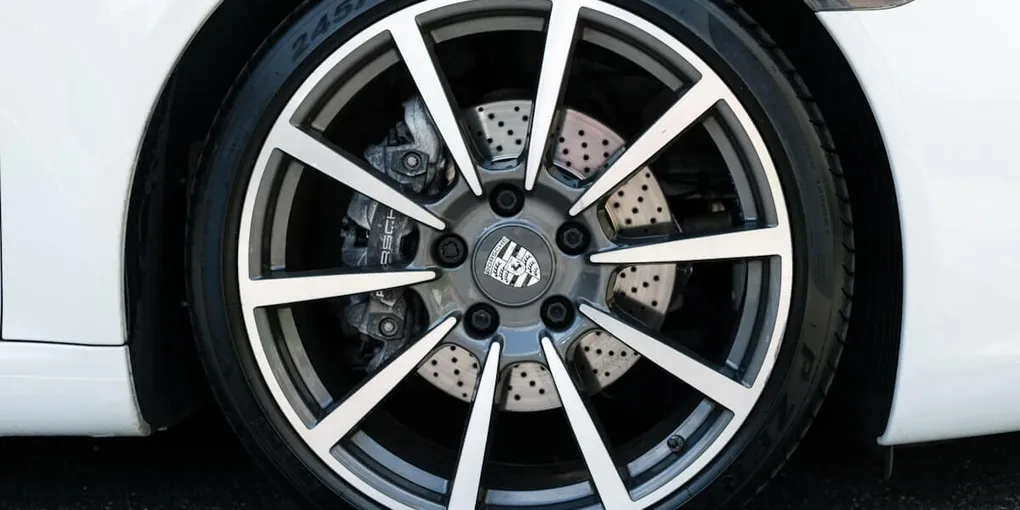

Tires are the only part of your car that actually touches the road. Four patches of rubber, each about the size of your outstretched hand, transmit every force the car generates — acceleration, braking, cornering — to the asphalt. Everything else in your car exists to manage those four contact patches. The engine produces power that the tires must convert to forward motion. The brakes generate friction that the tires must convert to deceleration. The suspension controls body movement so the tires can maintain consistent contact with an inconsistent surface. The sidewall of each tire carries the specifications that determine how well it performs all of these jobs. Learning to read those specifications is not a party trick. It is fundamental literacy for anyone who drives with intention. So it’s worth knowing what that hieroglyphic mess on the sidewall actually means. Let’s decode it.
The Main Event: P215/45R17 91W
You see this format on basically every modern tire. Here’s what each chunk means:
- P: “P-metric” — passenger vehicle. You might also see LT (light truck), or nothing at all (Euro-metric).
- 215: Section width in millimeters, measured sidewall-to-sidewall. Bigger number = wider tire.
- 45: Aspect ratio. The sidewall height is 45% of the section width. A lower number means a shorter, stiffer sidewall — great for handling, rough for ride quality.
- R: Radial construction. Basically every modern tire is radial. You won’t see bias-ply unless you’re restoring a 1960s muscle car.
- 17: Wheel diameter in inches. This is the rim size the tire fits.
- 91: Load index. 91 = 1,356 lbs per tire. Multiply by four for your maximum vehicle weight — but always check your door jamb sticker for the actual number.
- W: Speed rating. W = sustained 168 mph. The full hierarchy goes Q, S, T, H, V, W, Y, (Y) — each step is roughly 10–20 mph faster.
More Codes Worth Knowing
Treadwear, Traction, Temperature (UTQG)
The Uniform Tire Quality Grading system gives you three ratings:
- Treadwear: A relative number. 300 doesn’t mean 30,000 miles — it’s tested against a control tire (rated 100). Higher = longer life.
- Traction: AA, A, B, or C. Wet braking performance. AA is best.
- Temperature: A, B, or C. Heat resistance at speed. A is best.
DOT Code
The Department of Transportation code tells you where and when the tire was made. The last four digits are the date code: “3523” means the 35th week of 2023. Tires age out — don’t run anything older than 6–10 years regardless of tread depth.
M+S and the Three-Peak Mountain Snowflake
- M+S (Mud and Snow): Marketing, mostly. It means the tread pattern has some siping but it has not passed any actual snow performance test. Not a real winter tire.
- Three-Peak Mountain Snowflake: This symbol means the tire passed actual snow traction testing. If you live where it snows, look for this.
The tire sidewall is the most honest thing on your car. It does not lie about width, does not exaggerate its speed rating, does not pretend to be newer than it is. The numbers are right there, stamped into the rubber, waiting to be read. The only question is whether you take the time to read them. Next time you walk up to your car, look down. The sidewall will tell you everything you need to know about the only four things connecting you to the road. That is worth five seconds of your time.
Related: While you’re checking that sidewall, make sure your tire pressure is right too — the two go hand in hand.
Why It Matters
Mismatched tires are a false economy. The wrong size messes with your speedometer, ABS calibration, and handling balance. The wrong load rating on a heavy EV or truck? Dangerous. And old tires — even ones with good tread — can fail catastrophically as the rubber compound hardens and cracks.
Next time you’re standing next to your car, crouch down and read the sidewall. It’ll tell you exactly what you’re working with — no guessing required.
Plus-Sizing and Staggered Setups
If you want to upgrade your wheels, the sidewall numbers are your guide to doing it right. Plus-sizing means increasing wheel diameter while reducing aspect ratio to maintain the same overall tire diameter. Going from 215/45R17 to 225/40R18 gives you a wider contact patch and a shorter sidewall — better steering response, harsher ride. The trick is keeping the overall diameter within 3% of stock, or your speedometer and ABS calibration drift. Online tire size calculators make this math trivial, but the principle is worth understanding: you are trading sidewall compliance for steering precision, and there is no free lunch.
Staggered setups — wider tires in the rear than the front — are common on RWD performance cars. They add rear grip for acceleration and can balance understeer by giving the front less tire to overwhelm. But they also prevent tire rotation front-to-rear, and they can make a neutral car understeer if the stagger is too aggressive. The numbers on your sidewall tell you exactly what you are running. The difference between a 225 front and a 255 rear is the difference between a car that rotates and one that pushes. Read the numbers. Understand what they mean.
The sidewall is the most information-dense part of your car that most people never read. It tells you what the tire can do, what it cannot do, when it was made, and whether it is right for your car. The next time you are shopping for tires, skip the marketing copy and go straight to the sidewall specs. Width, aspect ratio, load rating, speed rating, and date code — those five numbers tell you everything that matters. Everything else is advertising.