
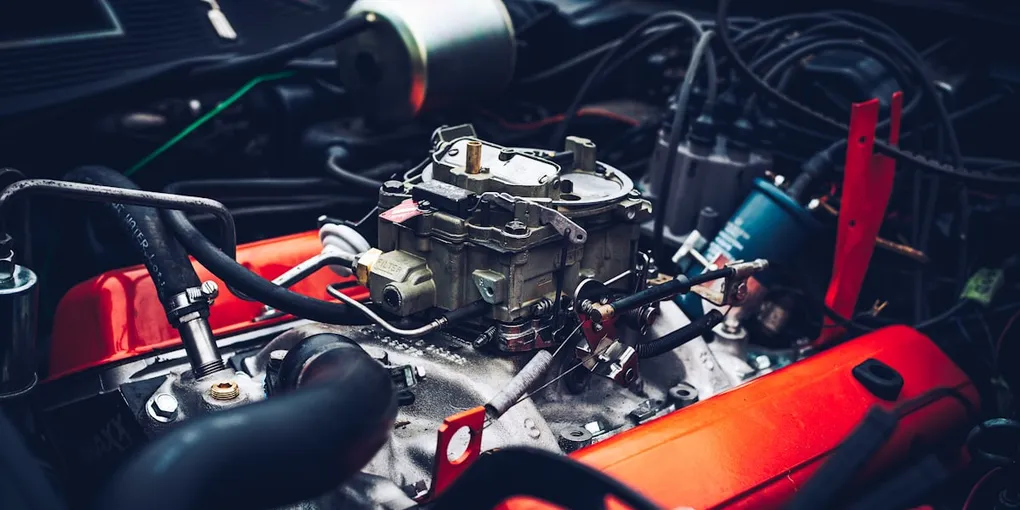

The aftermarket industry wants you to believe that tuning is a parts list. Cold air intake. Cat-back exhaust. ECU flash. Bigger turbo. Done.
The reality is that every component you change affects every other component, and the factory spent millions engineering the stock setup to work as a balanced system. When you swap the intake for something that flows more air, the MAF sensor reads differently, the ECU adjusts fueling, and suddenly your air-fuel ratio is off in part-throttle conditions. When you install stiffer engine mounts to reduce drivetrain slop, you introduce NVH that the factory spent months tuning out with carefully calibrated rubber bushings. Every modification is a trade. The skill of tuning is understanding what you are trading and deciding whether the trade is worth it before you spend the money.
That’s not tuning. That’s shopping. Real tuning is making the car work as a system, and that means understanding how every change ripples through everything else.
The Domino Effect
Bolt on 100 extra horsepower and three things happen immediately:
- Your brakes are now undersized. They were spec’d for the stock power level and the speeds that came with it. Higher corner-entry speeds mean more energy to dissipate.
- Your suspension is now wrong. More power means more weight transfer under acceleration. The rear squats harder. The front lifts more. Your spring rates and damping curves were designed for stock power.
- Your tires are now the bottleneck. More power doesn’t help if you can’t put it down. A tuned turbo car that just spins through second gear isn’t faster — it’s louder.
The smartest tuners don’t start with the engine. They start with tires and brakes, then suspension, then power. Because what’s the point of 400 hp if you can’t stop it or turn it?
The Tuning Hierarchy
| Priority | System | Why |
|---|---|---|
| 1 | Tires | Only thing touching the ground |
| 2 | Brakes | Must match the speeds you’ll reach |
| 3 | Suspension | Controls weight transfer and contact patch |
| 4 | Cooling | More power = more heat everywhere |
| 5 | Drivetrain | Clutch, diff, axles — what breaks when you launch |
| 6 | Engine | Power comes last |
ECU Tuning: The Real Deal
An ECU flash isn’t just “more boost.” A proper tune adjusts:
- Fuel maps across the entire rev range
- Ignition timing (too advanced = knock = dead engine)
- Boost curves (not just peak, but how it builds)
- Throttle response mapping
- Rev limiter behavior
- Temperature compensation strategies
A bad tune can destroy an engine in one pull. A good tune can make 50 extra horsepower and improve fuel economy at cruise. The difference is the tuner’s understanding of thermodynamics, not their marketing budget.
Supporting Mods
Power mods without supporting mods is how you end up on the side of the road with a rod through the block:
- Fuel system: Bigger injectors, higher-flow pump. Lean = hot = melted pistons.
- Intercooler: Compressed air is hot air. Hot air is less dense. Less dense = less oxygen = less power and more knock. A turbo running 15 psi can heat intake air to well over 200°F on a warm day. The intercooler’s job is to bring that back down toward ambient temperature before it reaches the cylinders. The stock intercooler was sized for stock boost. Turn up the boost without upgrading the intercooler, and intake air temperatures climb past the point where the ECU can compensate with timing retard. You end up making less power at 18 psi than you did at 12, while simultaneously increasing the risk of detonation. An upgraded intercooler is not a power mod in the traditional sense — it does not add horsepower. It prevents you from losing it.
- Oil cooling: More power = more heat in the oil. Oil that’s too hot loses viscosity and stops protecting bearings.
The Unsexy Truth
The most impactful “tune” on most cars is maintenance. Fresh fluids, proper alignment, good tires at the right pressure. A stock car with those three things right will embarrass a “stage 2” car with worn bushings and cheap tires every single time.
Dyno Tuning vs Street Tuning: Why Both Matter
A dyno tune gives you a controlled environment: consistent load, precise measurement, and repeatability. You can dial in fuel and timing at every cell of the ECU map without worrying about traffic or weather. But a dyno cannot replicate real-world airflow through the intercooler, heat soak in traffic, or the transient load conditions of lifting off and getting back on throttle mid-corner. A street tune — data-logging on actual roads — catches these edge cases. The best approach is both: base map on the dyno, refinement on the street. Skip either and you leave power, drivability, or reliability on the table.
Tuning is the art of making a car feel like it came from the factory this way — faster, sharper, more alive — without making it worse at being a car. The best modified cars are not the ones with the biggest dyno sheets. They are the ones where every change serves a purpose, every part was chosen to work with every other part, and the result is greater than the sum of the invoice. Build with intention. Tune with data. Drive with respect for the engineering. That is how you end up with a car that is genuinely fast — not just loud.
Related: Tuning means you’ll be working on your own car — start with every car fluid you need to know. And before you touch the engine, understand your suspension.