
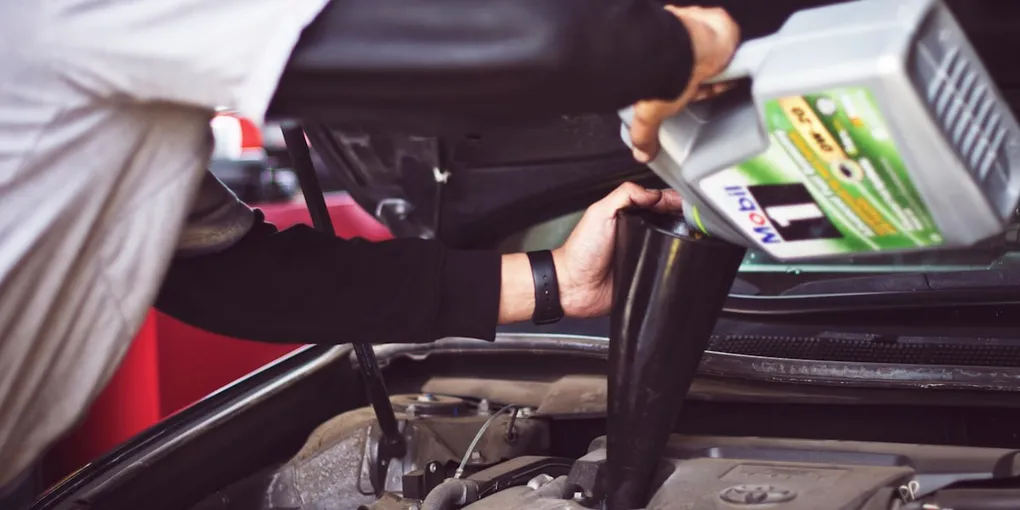

Your engine was designed with a safety margin. That margin assumes you change the oil on schedule, warm the car up before hammering it, and spend most of your time at 2,500 rpm on the highway. Track days blow right through that margin. Here’s what breaks first — and how to stop it.
Oil: The First Casualty
On track, your oil is doing things the engineers never planned for. The oil in a street engine spends most of its life at 90-100 degrees Celsius, circulating through passages designed for steady-state highway cruising. On a track, the same oil can hit 130 degrees within five laps, at which point its viscosity drops precipitously and the protective film between bearing surfaces thins to near-zero. This is when engine damage happens — not from a single catastrophic event, but from cumulative wear that accelerates exponentially above the oil’s rated temperature range. Every ten degrees above 120 Celsius roughly halves the effective life of the oil’s additive package. After twenty minutes of hard track driving on stock cooling, the oil in your sump is not the same fluid you poured in that morning. Sustained high-RPM operation means sustained high oil temperatures. At 280°F, most conventional oils have lost significant viscosity. At 300°F, they’re breaking down chemically. At 320°F, you’re running on water.
Solutions:
- Oil cooler. Not optional for track use. A proper thermostatic oil cooler keeps temps in the 220-250°F window where oil is happiest.
- Higher viscosity. If the manual calls for 0W-20, consider 5W-30 for track days. The “20” or “30” is the hot viscosity — you need more of it when oil temps spike.
- Change it after every event. Track miles are not highway miles. A single track day can put more wear on oil than 5,000 street miles.
Oil Starvation
This is the silent killer. In a long, high-G corner, oil sloshes away from the pickup in the oil pan. The pump sucks air. For a split second, your main and rod bearings are running metal-on-metal. You don’t feel it. You don’t hear it. But microscopic bearing material gets scrubbed away, and over time, those clearances stack up until — spun bearing, dead engine.
The fix: a baffled oil pan or an Accusump accumulator. Baffles are simple — metal walls welded into the pan that physically block oil from moving away from the pickup. An Accusump is more clever: it is a cylinder containing a piston with oil on one side and pressurized air on the other. When oil pressure is normal, the Accusump fills with pressurized oil. When pressure drops — even for a fraction of a second during a high-G corner — the air pressure pushes the piston, forcing oil back into the engine’s oil galleries, maintaining pressure at the bearings until the pickup is submerged again. It is essentially a mechanical backup battery for your oil system, and it reacts faster than any electronic sensor could. Track-prepped cars need one or both.
Fuel Starvation
Same physics, different fluid. In a long right-hander with less than half a tank, fuel sloshes away from the pump pickup. The engine leans out momentarily. One lean event at full throttle = detonation. Detonation at 7,000 rpm = you’re shopping for a new short block.
The fix: run at least 3/4 tank on track. Or install a surge tank — a small secondary tank with its own pump that stays full regardless of chassis G-forces.
Heat Management
| System | Stock Limit | Track Reality |
|---|---|---|
| Oil temp | ~250°F safe | 280°F+ after 5 laps |
| Coolant temp | ~220°F thermostat | 230-240°F on track |
| Brake fluid | DOT 4, 446°F dry boiling | Boils at 400°F+ when wet |
| Transmission fluid | ~200°F safe | 250°F+ on track |
Every one of these has a fix: better radiators, ducting, higher-temp fluids, external coolers. Pick the ones that match your car’s weaknesses.
Beyond Oil: Cooling the Whole Package
Oil temperature gets the attention because it is the easiest to measure, but it is not the only fluid cooking on track. Your power steering fluid can boil in the reservoir during sustained high-RPM cornering, especially if the pump is mounted near the exhaust. Your differential fluid can exceed 300°F in a car with a clutch-type LSD that is constantly working. Your transmission — manual or automatic — sees case temperatures that would alarm any engineer reading the spec sheet. Every one of these systems benefits from dedicated cooling: a diff cooler if you are endurance racing, a trans cooler if your automatic hunts between gears on track, and power steering cooling if you feel the assist fade after 15 minutes of hard driving. The engine is the star of the show, but the supporting cast needs protection too.
The Pre-Track Checklist
- Fresh oil (consider track-weight viscosity)
- Fresh brake fluid (DOT 4, bled within 2 weeks)
- Check pad thickness (at least 50%)
- Torque your lug nuts (do not trust the tire shop)
- Remove everything loose from the cabin
- Check tire pressures cold, adjust for hot target
Track driving reveals weaknesses that street driving hides. An engine that feels strong on the highway might overheat by lap five. Brakes that stop fine from 70 mph might fade into nothing from 120. The fixes are not secrets — they are known, proven, and accessible. The difference between the driver who blows an engine at their third track day and the one who runs the same car for years is not luck. It is preparation. Prepare the car, and the car will reward you with every lap you ask of it.
Related: Heat is only one enemy — the components taking that heat need to survive, which is where forged vs cast matters. And if you’re doing your own work, know every fluid in your car.
The single most important thing you can do for a tracked car is also the least glamorous: data logging. An oil temperature gauge, a coolant temperature gauge, and an oil pressure gauge — ideally all logged — tell you exactly when your car is overheating and which system is struggling first. Guessing is expensive. Data is cheap. Install the gauges before you install the turbo. Your engine will thank you by not exploding.