
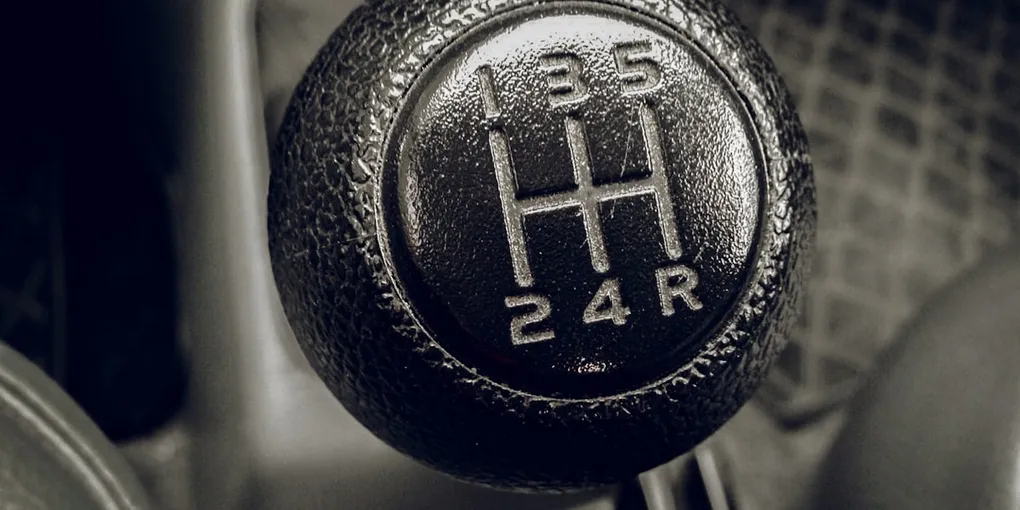

The gearbox is the most underappreciated component in a car. The engine gets all the glory, but the gearbox is what translates horsepower into motion. And the type of gearbox you have changes everything about how the car feels.
The Manual: Synchronizers and You
A traditional manual transmission uses constant-mesh gears — all gear pairs are always engaged, spinning freely on the output shaft. When you move the shifter, you’re not meshing gears. You’re engaging a dog clutch that locks a specific gear pair to the output shaft.
The synchronizer (synchro) is the unsung hero. It’s a brass cone clutch that spins the gear up to match the output shaft speed before the dog teeth engage. Without synchros, every shift would require a perfect rev match — which is exactly how dog boxes work.
Why manuals are dying: they’re slower than DCTs, less efficient than CVTs, and most buyers don’t want them. But for driving engagement, nothing replaces the mechanical connection of your left foot to the clutch, your right hand to the shifter, and your ear to the revs.
The Dual-Clutch (DCT): Two Gearboxes in One
A DCT is essentially two manual transmissions in one housing, each with its own clutch. One handles odd gears (1, 3, 5, 7), the other handles evens (2, 4, 6). While you’re accelerating in 3rd, 4th is already pre-selected. The shift is just one clutch opening as the other closes.
This is why DCT shifts feel instantaneous — they literally are. The shift time is the time it takes to swap clutches, which is measured in milliseconds. No torque interruption. No delay. Just bang-bang-bang up through the gears.
The downside: DCTs are heavy, complex, and expensive to repair. At low speeds (parking lots, stop-and-go), they can be jerky because there’s no torque converter to smooth things out. And they overheat under sustained launch-control abuse.
The Sequential: Dog Boxes and Straight Cuts
A sequential gearbox is what you find in race cars and high-end motorcycles. Instead of an H-pattern, you push or pull a single lever (or paddles) to go up or down one gear at a time. Neutral is somewhere between 1st and 2nd, and reverse is usually a separate lever.
Inside, sequentials use dog engagement instead of synchros. The gears have large, chunky “dogs” that slam into each other. No brass cones, no friction surfaces — just hardened steel teeth engaging with mechanical violence. This is why sequential shifts are loud, harsh, and require precise rev-matching.
Dog boxes shift faster than synchro boxes because there’s no waiting for a synchronizer to spin up. But they wear faster, require more maintenance, and are a handful on the street. They’re designed for flat-out racing, not commuting.
The Comparison
| Type | Shift Speed | Engagement | Street Manners | Maintenance |
|---|---|---|---|---|
| Manual (synchro) | Slow | Smooth | Excellent | Low |
| DCT | Instant | Smooth | Good | Expensive |
| Sequential (dog) | Very fast | Violent | Terrible | Frequent |
| Torque-converter auto | Moderate | Buttery | Excellent | Low |
| CVT | Seamless | None (belt) | Great | Moderate |
What You Actually Want
For street driving: a good manual or a well-tuned DCT. The manual wins on engagement, the DCT wins on speed. For track work, the DCT pulls ahead — faster shifts, both hands on the wheel, no missed-shift money shifts.
Here is how they stack up for what matters:
- Daily driving: Torque-converter auto or DCT. Smooth in traffic, effortless at low speeds, and modern examples shift quickly when you push them.
- Weekend fun: Manual. Nothing replaces the mechanical connection of rowing your own gears on a back road. The engagement is the point.
- Track work: DCT. Speed, consistency, and keeping both hands on the wheel matter when lap times count.
- Pure theater: Sequential. Impractical, expensive, and absolutely glorious. The sound of a dog-ring sequential at full throttle is worth the rebuild costs.
The sequential is a fantasy for most of us. Glorious, violent, mechanical — and completely impractical for anything but a dedicated race car. It is also worth noting that regardless of which gearbox you choose, the maintenance matters more than the type. A neglected DCT with old fluid will shift worse than a well-maintained manual. A manual with worn synchros will grind into every gear. The transmission fluid in any gearbox — manual, DCT, auto, or sequential — degrades over time, and the “lifetime fill” claims on some modern cars are a calculation based on the expected service life of the vehicle under warranty, not a statement about fluid longevity. Change your gearbox oil on schedule. It is the cheapest insurance policy your transmission will ever get.
What About the Torque Converter and CVT?
The traditional automatic and the continuously variable transmission are the two outsiders in this conversation, but they deserve mention because they represent the opposite extreme from the manual. The torque-converter auto uses fluid coupling instead of a clutch — the engine spins an impeller that pushes transmission fluid through a turbine, which drives the gearset. This is why old automatics feel slushy: the fluid coupling absorbs power until the turbine catches up. Modern torque-converter autos (like ZF’s 8-speed) lock up the converter after takeoff, eliminating the slush. They shift nearly as fast as a DCT and are far smoother in traffic.
The CVT, found in most economy cars, replaces gears entirely with a belt running between two variable-diameter pulleys. There are no shift points because there are no fixed gears — the engine can sit at its most efficient RPM indefinitely while the transmission continuously varies the ratio. Brilliant engineering. Soul-destroying to drive. The CVT’s efficiency comes at the cost of any connection between your right foot and the car’s sense of urgency. It is the transmission equivalent of a spreadsheet: effective, logical, and completely devoid of joy.
The gearbox is the translator between your right foot and the road. A good one disappears — shifts happen instinctively, ratios feel like they were chosen for the corner you are in, and the mechanical connection between your hand and the gears is a source of satisfaction rather than frustration. A bad one fights you at every shift, hunts between gears, or saps the joy from an otherwise excellent engine. Choosing the right gearbox — or maintaining the one you have — is not a footnote in the car-buying decision. It is central to how the car will feel every time you drive it. Choose carefully. Maintain religiously. And if your car has three pedals, enjoy it while you can.
Related: Shifting is only one part of the equation — rev matching and heel-toe downshifting are how you make a manual gearbox sing. And if you’re chasing lap times, understanding your car as a momentum car or power car changes how you use every gear.